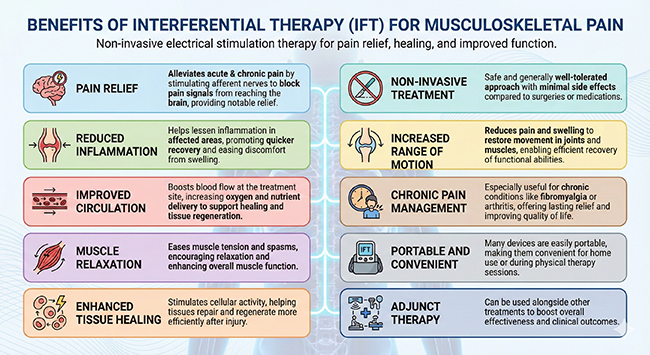
Benefits of Interferential Therapy for Musculoskeletal Pain
Pain Relief:
-
Interferential therapy (IFT) can alleviate both acute and chronic pain by stimulating afferent nerves to block pain signals from reaching the brain, resulting in notable relief for sufferers.
Reduced Inflammation:
-
IFT may help lessen inflammation in affected areas, promoting quicker recovery from injuries and easing discomfort caused by swelling.
Improved Circulation:
-
This therapy boosts blood flow at the treatment site, which increases oxygen and nutrient delivery, supporting healing and tissue regeneration.
Muscle Relaxation:
-
IFT can ease muscle tension and spasms, encouraging relaxation and enhancing overall muscle function—especially helpful for those dealing with muscle tightness or overuse.
Enhanced Tissue Healing:
-
The current used in interferential therapy stimulates cellular activity, helping tissues repair and regenerate after injury.
Non-Invasive Treatment:
-
As a non-invasive approach, IFT is safe and generally well-tolerated, presenting minimal side effects compared to surgeries or medications.
Increased Range of Motion:
-
By reducing pain and swelling, IFT helps restore movement in joints and muscles, enabling patients to recover their functional abilities more efficiently.
Chronic Pain Management:
-
IFT is especially useful for people coping with chronic pain conditions like fibromyalgia or arthritis, offering lasting relief and improving quality of life.
Portable and Convenient:
-
Many IFT devices are easily portable, making them convenient for home use or during sessions with a physical therapist.
Adjunct Therapy:
-
IFT can be used alongside other treatments, such as physical or ultrasound therapy, to boost overall effectiveness.
Conclusion
Interferential therapy provides numerous benefits for addressing musculoskeletal pain, including pain reduction, improved circulation, and muscle relaxation. Consult your healthcare provider to learn whether IFT could be appropriate for your condition.